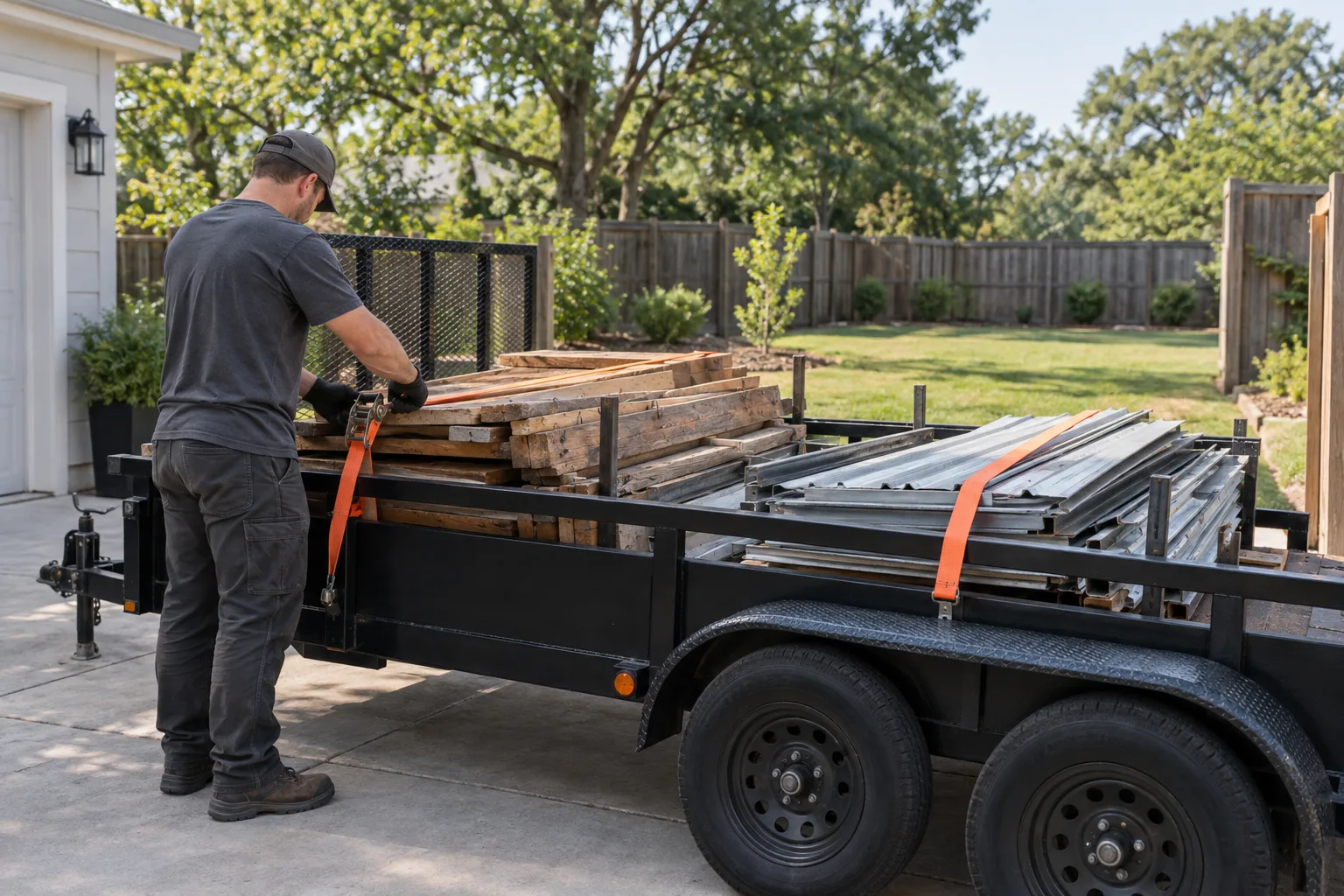
Shed debris is easier to haul when it is separated into predictable groups: lumber, sheet metal, roofing, fixtures, and contents. Keep the access path open and flag any material that may have special disposal restrictions.
List what is actually in the pile
“One shed” can mean a stack of clean metal panels or a mix of shingles, rotten lumber, shelving, paint cans, lawn chemicals, and household junk. Send current photos and rough dimensions so the provider can plan the right load space.
| Material | What to note | Why it matters |
|---|---|---|
| Wood framing | Rot, protruding nails, treated lumber | Handling and disposal options differ |
| Metal panels | Sharp edges, panel length, rust | Changes stacking and securing |
| Roofing | Shingles, sheet metal, underlayment | Affects weight and load separation |
| Contents | Liquids, fuel, batteries, chemicals | May be excluded or require another outlet |
Keep the loading path clear
Park vehicles away from the work route. Open gates, secure pets, and move hoses or garden tools. If a trailer cannot reach the shed, the crew needs a safe carry path to the driveway.
Check local acceptance rules
Arab’s city landfill identifies itself as a construction-and-demolition facility, limits loads by jurisdiction, inspects loads, and excludes several materials. A removal provider still needs to choose an authorized destination for the actual load. Do not assume every mixed pile can go to one facility.
Ask how the load will be secured
Long boards and sheet metal need stable stacking and proper securement. The hauling plan should keep loose material contained from the property through transport.
Next step
Use this guide to document the job, then review the shed hauling service scope or prepare the details for an estimate conversation.