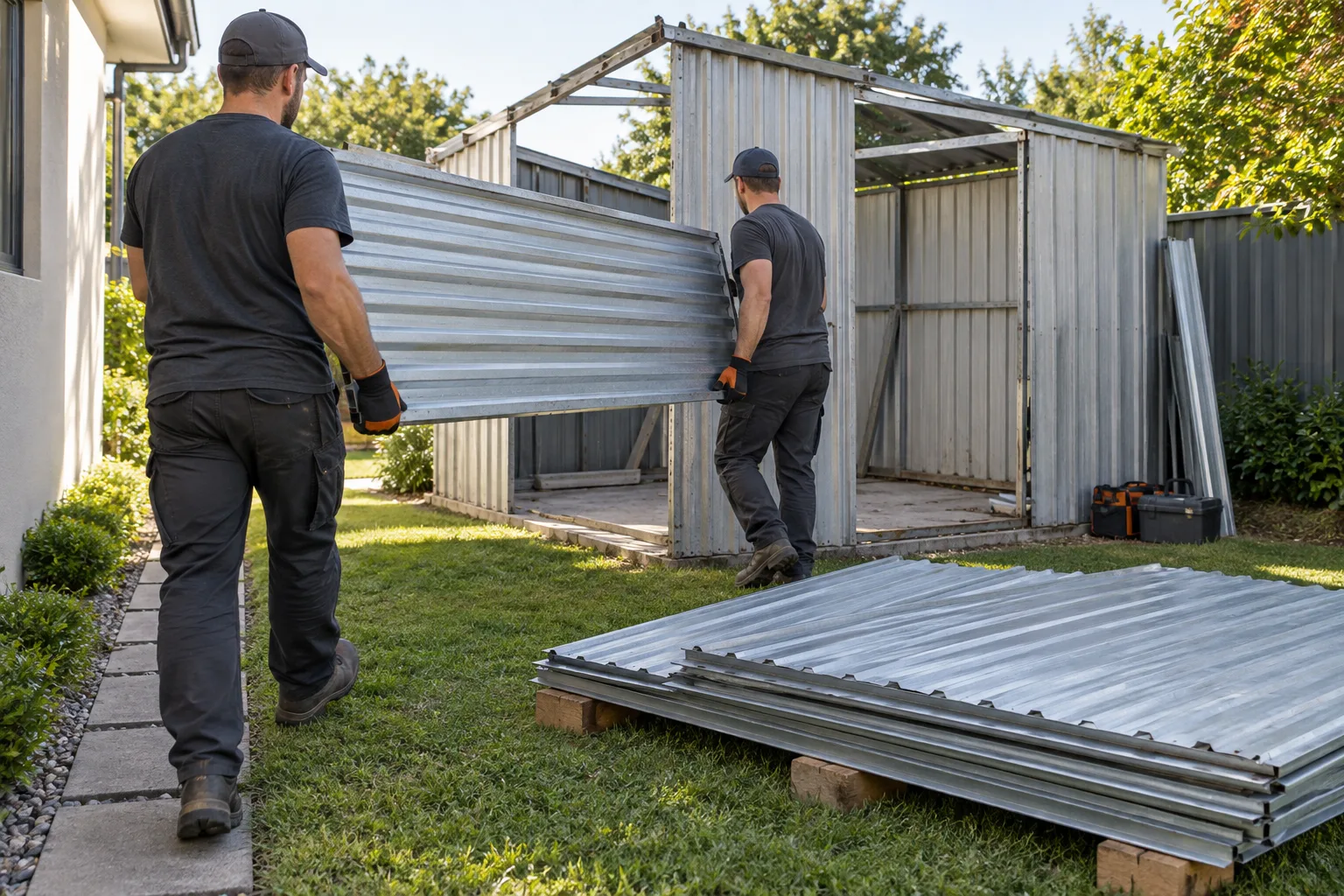
Prepare a metal shed by emptying it, identifying utility connections, photographing the anchoring system, and clearing the route to the driveway. Do not start pulling rusted panels if the frame is leaning or the roof has shifted.
Empty and inspect from a safe position
Remove ordinary stored items that can be carried safely. Keep fuel, paint, batteries, pesticides, and pressurized containers separate and tell the provider about them. If a wall moves when touched or the roof sags, stop and share photos instead of entering.
Photograph fasteners and anchors
Metal sheds may be screwed, bolted, clipped, or anchored to a slab. Take close photos of the corners, base rails, and roof connections. Rust can make a nominally simple connection unpredictable.
Corrugated metal can form sharp edges when bent or torn. Keep children and pets away from the work area and let the removal crew decide how panels will be separated, stacked, and secured.
Clear the route
Move hoses, planters, toys, and vehicles. Measure gates and note tight turns. Long panels need more turning room than their width suggests.
Confirm what remains
Ask whether the floor frame, anchors, shelving, and base are included. A metal shell may be gone while a timber platform or concrete pad stays unless the estimate names it.
Next step
Use this guide to document the job, then review the metal shed removal service scope or prepare the details for an estimate conversation.